
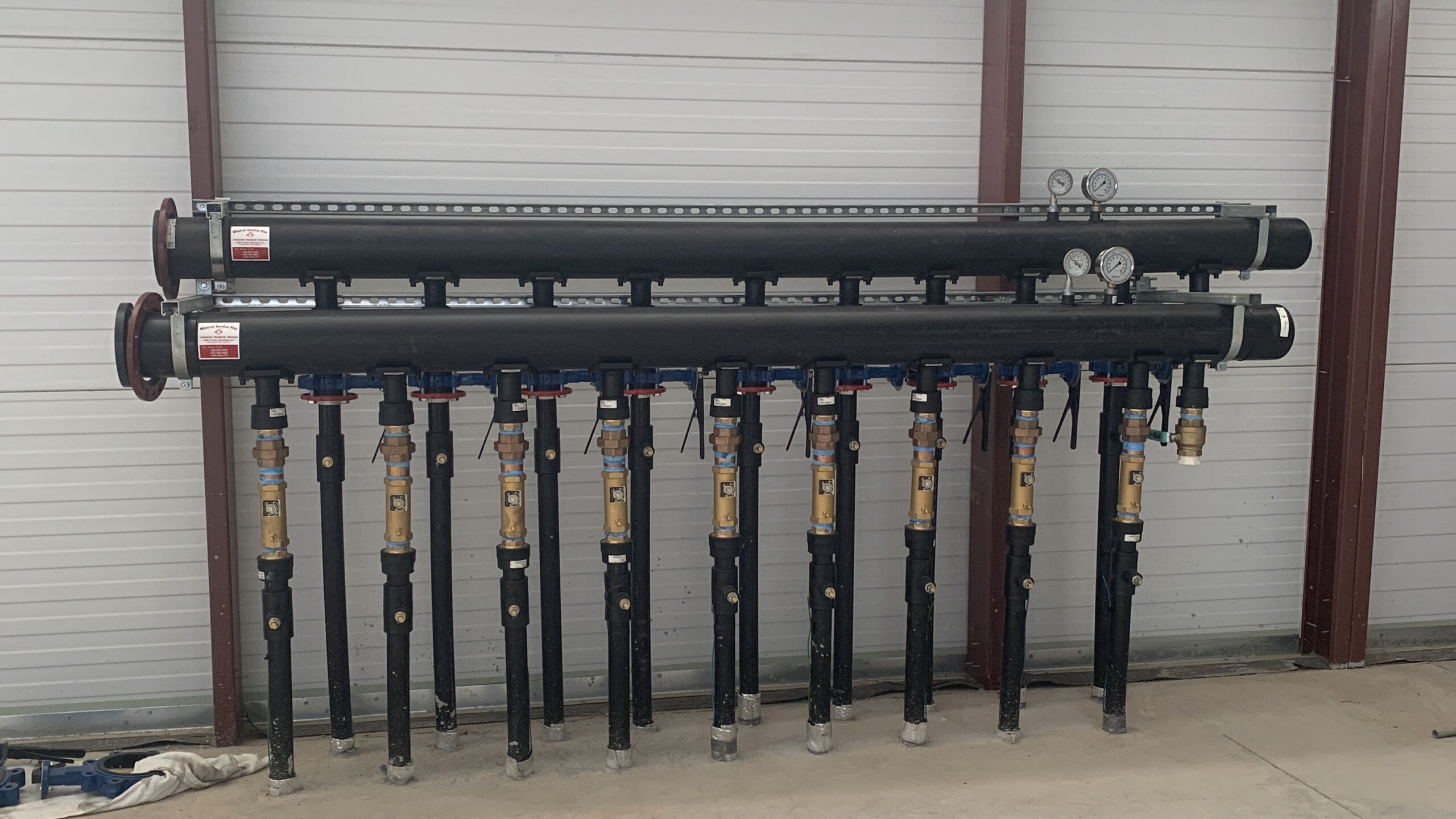
As owners continue to prioritize energy efficiency, sustainability, and long-term operating cost savings, geothermal heating and cooling systems are gaining momentum across the construction industry. By leveraging the earth’s consistent underground temperatures, geothermal systems provide an energy-efficient alternative to traditional HVAC systems while reducing energy consumption and supporting carbon reduction goals.
From public safety facilities and community libraries to military and educational buildings, Stahl has seen firsthand how geothermal technology can help owners create high-performing, sustainable facilities.
What Is a Geothermal Well System?
A geothermal well system uses a network of underground wells or piping loops to exchange heat with the earth. Because underground temperatures remain relatively stable year-round, geothermal systems can efficiently provide both heating and cooling.
During winter, heat is transferred from the ground into the building. During summer, heat is removed from the building and transferred back into the earth. This process reduces energy use, lowers operating costs, and supports long-term sustainability objectives.
Advancing Geothermal Innovation at Hennepin County Public Safety Service Headquarters
The Hennepin County Public Safety Service Headquarters demonstrates how innovative geothermal technology can support ambitious sustainability goals. The 100,000-square-foot facility incorporates a groundwater-sourced Darcy Well geothermal system alongside solar panels, electrification strategies, and a green roof.
Unlike traditional geothermal systems that may require dozens of wells, the Darcy Well system uses a groundwater-based approach that can achieve efficient heating and cooling with significantly fewer boreholes. As a 24/7 public safety facility, the building shows how geothermal systems can deliver reliable performance while helping reduce environmental impact.
Tell me more: Building a Greener Future at the Hennepin County Public Safety Service Headquarters
Creating Sustainable Community Spaces at Hamline Midway Library
At the Hamline Midway Library in Saint Paul, Minnesota, geothermal heating and cooling are part of a broader strategy to improve energy efficiency and support the City’s environmental goals.
Combined with solar energy systems, the geothermal system helps create a comfortable environment while reducing the library’s long-term energy demands. The result is a community gathering space designed for both performance and sustainability.
Supporting Large-Scale Performance at the Army National Guard ACFT Field House
The Army National Guard ACFT Field House demonstrates how geothermal systems can perform at a significant scale. The facility’s 63 geothermal wells, each extending approximately 300 feet below grade, provide the foundation for its heating and cooling system.
The extensive geothermal well field supplies a reliable source of underground thermal energy, helping support the rigorous demands of a facility dedicated to year-round military training and readiness activities.
Creating Sustainable Learning Environments
School districts continue to evaluate ways to reduce operating costs while meeting sustainability goals. At the Abbie Grove Elementary School in Ankeny, Iowa, a geothermal well field plays a key role in the building’s heating and cooling system.
By utilizing the earth’s natural temperature, the system provides an energy-efficient solution that helps maintain a comfortable learning environment while supporting the district’s long-term operational objectives. Geothermal technology offers schools an effective way to align facility performance with environmental stewardship.
Turning Sustainability Goals into Reality
Successful geothermal projects begin with early planning, coordination, and evaluation. Key considerations include:
- Underground conditions and existing utilities
- Site constraints and geothermal well field layout
- Drilling logistics and construction sequencing
- Protection of geothermal infrastructure during construction
- Long-term system performance and maintainability
Choosing an experienced partner can help identify and address these challenges early, reducing risk and supporting a smoother implementation process.
If you’re considering geothermal heating and cooling for an upcoming project, Stahl can help evaluate feasibility, costs, and system options while aligning geothermal technology with your sustainability and operational goals.